

Before the first horse enters the track, the race day has already begun.
There is the early decision over what to wear. The search for the right shoes. The final adjustment to a jacket or dress. Perhaps a last-minute change of mind about the hat.
Then comes the journey to the racecourse.
By the time the gates open, the outfit is no longer simply an outfit. It has become part of the occasion.
For generations, Australian racing has provided one of the country’s great excuses to dress up. While everyday fashion has become more relaxed, race-day style has retained its sense of ceremony.
And that may be precisely why it remains so appealing.
Dressing Is Part of the Anticipation
Most sporting events begin when the competition starts.
Race day is different.
The experience begins long before the horses reach the barriers.
Choosing an outfit creates anticipation. People think about colours, silhouettes, accessories and the weather. Friends may discuss what they’re wearing weeks in advance.
The preparation becomes part of the celebration.
It is similar to preparing for a wedding, a special dinner or a major cultural event. The act of dressing signals that the day is different from an ordinary Saturday.
The Australian Approach to Elegance
Australian race-day fashion has its own personality.
It borrows from traditional racing style but is influenced by the country’s climate and relatively relaxed approach to formal dressing.
That creates an interesting balance.
A racegoer might wear a beautifully tailored dress but choose natural fabrics. A man may wear a formal suit but introduce relaxed colours or contemporary shoes.
The result is polished without necessarily being rigid.
Australian elegance has always had room to breathe.
Why Millinery Still Has Power
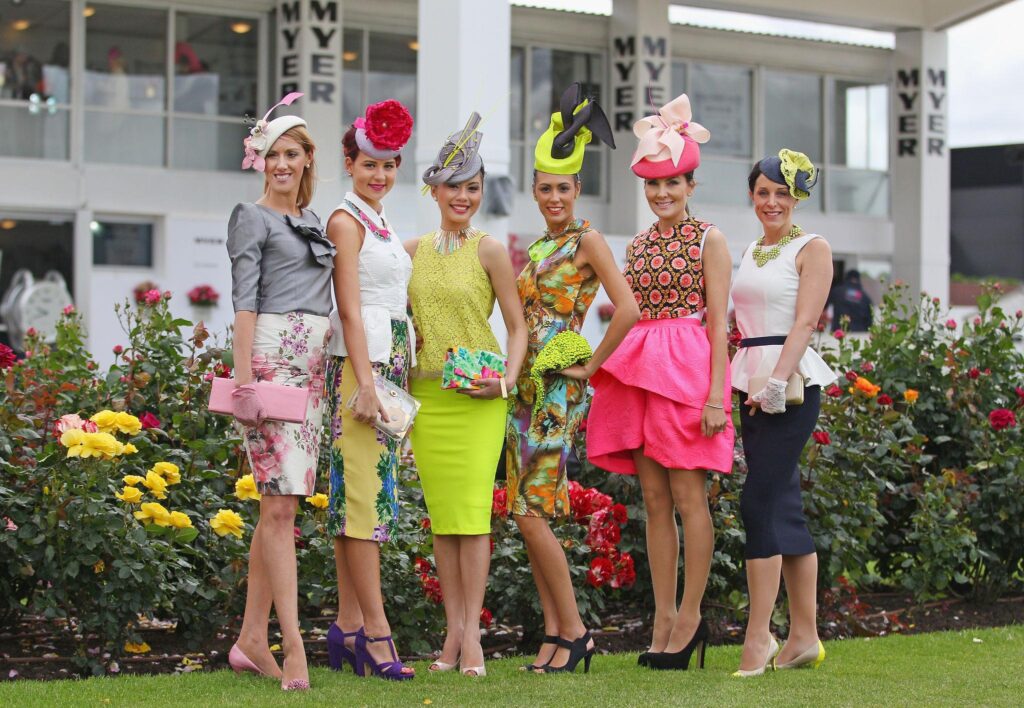
In an age when many fashion traditions have disappeared, the race-day hat remains remarkably resilient.
Part of its appeal is visual.
A beautiful hat changes the shape of an outfit and creates an immediate focal point. It can make a simple dress look ceremonial and transform a racegoer into a recognisable figure within a crowd.
But millinery also encourages creativity.
There are no limits to the shapes, textures and materials that can be used.
Some hats are understated.
Others are deliberately impossible to ignore.
Both have their place at the races.
The Colour of the Crowd
Walk through a major Australian race meeting and the colours can be almost as impressive as the action on the track.
Soft pastels sit beside intense jewel tones. Black and white create a timeless contrast. Natural neutrals provide a quieter alternative.
Colour is also one of the easiest ways to communicate personality.
A racegoer who normally dresses conservatively might choose a bright accessory for the occasion. Someone who loves colour may use race day as an opportunity to go even further.
There is freedom in knowing that the environment welcomes experimentation.
When the Crowd Becomes the Show
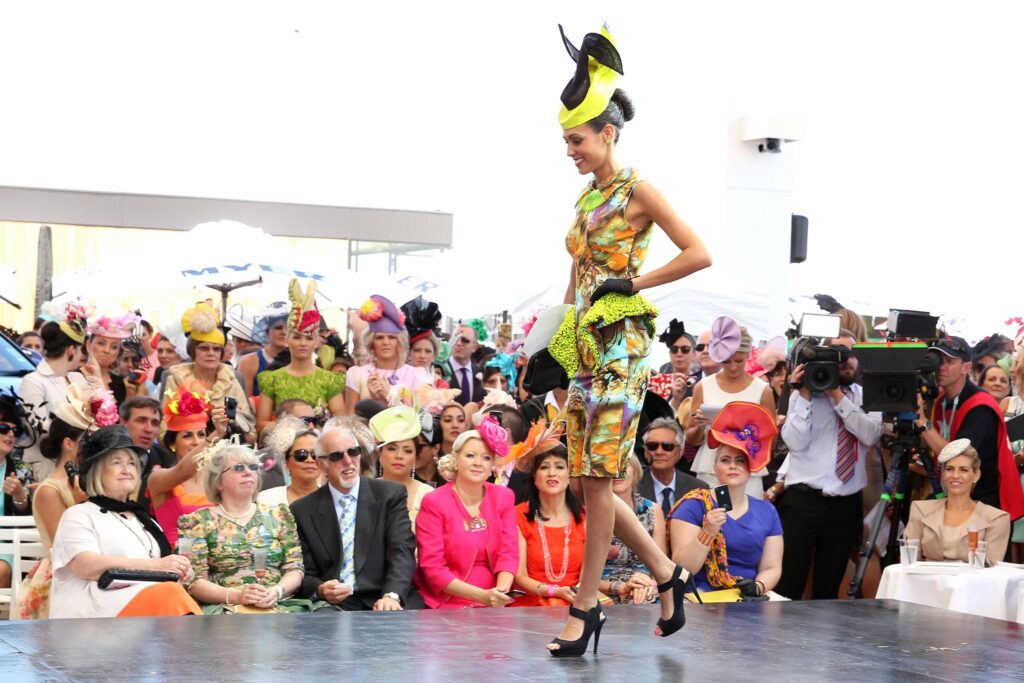
The racecourse is unusual because the audience is part of the spectacle.
At a football match, spectators generally dress for comfort and team identity.
At the races, spectators can become part of the visual story themselves.
Photographers move through the crowd looking for interesting outfits. Friends take photographs together. Fashion editors observe emerging trends.
The audience becomes an unofficial runway.
And unlike a traditional runway, there is no single collection.
There are thousands.
The Modern Racegoer’s Wardrobe
Contemporary race-day style is also becoming more versatile.
Instead of purchasing an outfit designed to be worn once, many people are choosing pieces that can return for different occasions.
A tailored jacket might work at the races, a wedding and a formal dinner.
A classic dress can be transformed through different accessories.
A quality hat can become a signature piece rather than a one-day purchase.
This shift towards versatility has made race-day dressing more practical without making it less exciting.
Comfort Has Changed the Rules
Today’s racegoer expects more from clothing.
Looking elegant is important, but so is being able to move, walk and spend hours outdoors comfortably.
This has influenced everything from fabric choices to footwear.
Breathable materials, supportive shoes and lightweight layers have become increasingly valuable.
The best modern race-day outfit isn’t simply beautiful at 11am.
It still works at 5pm.
A Different Kind of Men’s Fashion
Men’s race-day dressing has quietly undergone its own transformation.
The traditional suit remains a reliable choice, but modern racing style offers more room for experimentation.
Lighter colours, textured fabrics, patterned shirts and distinctive accessories can all create personality.
The emphasis is increasingly on tailoring rather than strict formality.
A simple suit that fits exceptionally well can have more impact than an elaborate outfit that feels forced.
The Role of Personality
Perhaps the biggest change in race-day fashion is the growing importance of individuality.
There was once a stronger expectation that racegoers should conform to a particular definition of elegance.
Today, style is more personal.
Minimalism can be just as sophisticated as maximalism.
A simple black-and-white look can stand alongside an extravagant floral dress.
A classic suit can share the same space as experimental tailoring.
The rules haven’t disappeared.
They have simply become more flexible.
Fashion Creates Memories
Clothing has an unusual relationship with memory.
A particular scent, song or photograph can transport us back to a moment.
The same is true of fashion.
A hat can remind someone of a Melbourne spring afternoon. A dress can bring back memories of celebrating with friends. A suit can become associated with an important family occasion.
Race-day clothing therefore becomes more than something worn for a few hours.
It becomes part of the story of the day.
The Future of Race Day Style
The next generation of Australian racegoers will undoubtedly dress differently.
They will bring new ideas about gender, sustainability, tailoring and personal expression.
But the desire to make an occasion feel special is unlikely to disappear.
That is the real strength of race-day fashion.
It adapts without losing its identity.
The Ritual Continues
Eventually, the horses will enter the barriers.
The crowd will fall quiet.
Then the gates will open, the field will surge forward and the noise will return.
For a few minutes, nobody will be thinking about hats, suits or shoes.
Everyone will be watching the race.
But before that moment — and long after it — fashion will remain part of the experience.
Because Australian race day isn’t simply somewhere we go to watch horses.
It is an occasion we dress for, remember and celebrate.